

About ALTARA
The fire of ideas
The name
Where the fire is kept
ALTARA joins the altar, the high place where a fire is kept, and the Latin altus: high, and deep. It is a place where ideas are tended carefully, tested rigorously and passed on.
Our mark carries the idea. The large chevron is a peak and a hearth. The smaller one rising inside it is the next idea, built within a structure designed to last.
- Anchors
- Research pillars
- Strategic horizons
- Years ahead, at most
Three anchors of perspective
One institute, three vantage points
Three seats of political decision-making, on three continents and in three time zones.
New Delhi
Scalable infrastructure and democratic scope
India provides the global standard for deploying large-scale Digital Public Infrastructure, such as open-architecture identity systems and unified payment networks, as secure, population-scale public goods. It offers an empirical blueprint for developing nations seeking to modernise economically without surrendering their civic spaces to authoritarian control or monopolistic platforms.
Cape Town
Continental diplomacy, resource statecraft and multilateral voice
South Africa brings the perspective of a constitutional democracy forged through negotiated transition, and a leading voice in the African Union, the G20 and the wider Global South. As custodian of some of the world's most strategic mineral reserves, it sits at the centre of the coming contest over critical supply chains, and offers an indispensable bridge between emerging economies and the institutions that were built without them.
Berlin
Industrial depth, regulatory statecraft and the European core
Germany brings the perspective of Europe's largest economy and industrial base, anchored in the European Union's model of regulatory excellence, institutional accountability and the rule of law. It offers the legal and industrial architecture needed to impose democratic constraints on concentrated commercial power, defend individual data privacy, and manage the deep societal disruptions of technological transition.
- Empirical techno-realism
- We consciously reject both tech-utopian hype and alarmist narratives. Advanced technologies and economic shifts are evaluated neutrally, strictly for their measurable impact on state capacity, sovereign power and human security.
- Strict analytical autonomy
- The initiative operates independently of any singular state agenda, political party, corporate sponsor or domestic electoral cycle. Our commitment is to objective forecasting and empirical accuracy.
- Interdisciplinary literacy
- Recognising that modern statecraft cannot be understood in isolation, every policy analysis jointly integrates traditional geopolitical theory, structural macroeconomics and technical engineering parameters.
- Long-horizon perspective
- We deliberately separate our research from the transient news cycles of the day. Our analytical frameworks are designed to decode and address structural shifts over five-to-ten-year horizons.
Founding team
The founders
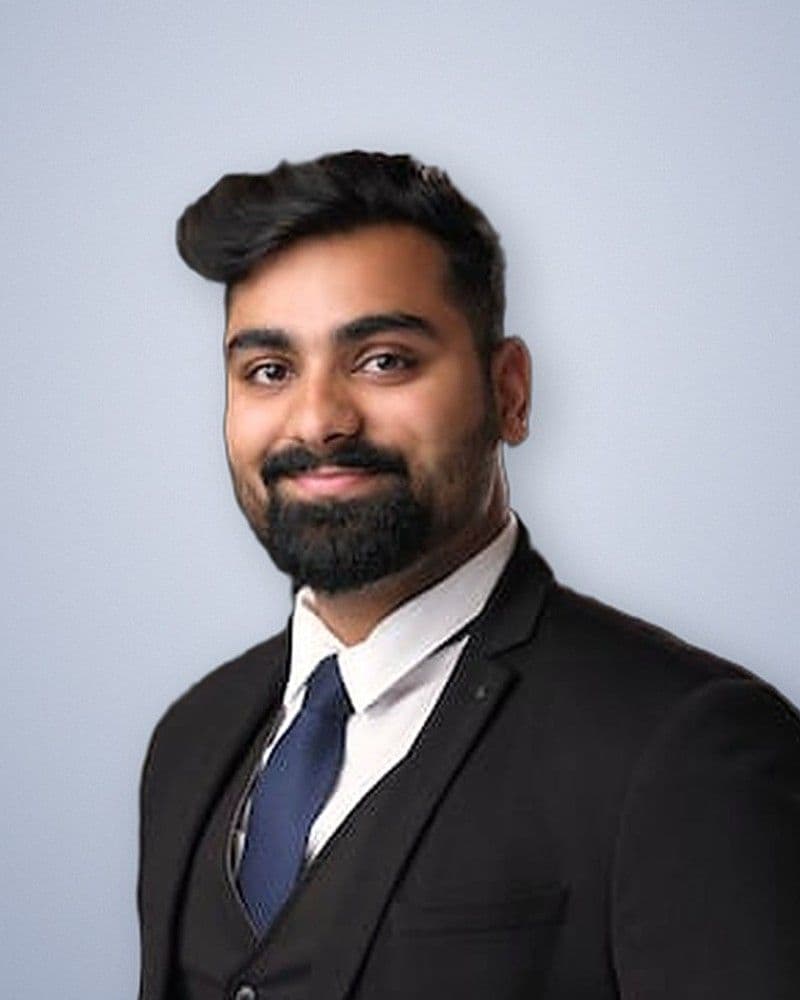
Harsh Suri works on geopolitics, climate change and sustainability. He holds a BA (Honours) in Political Science from Hindu College, University of Delhi, is an alumnus of the KAS International Political Campaign Programme and the Tsinghua Global Youth Dialogue, and was selected as the only Indian in the Carnegie Ethics Fellowship programme.
He is Convenor of the NATO India Youth Conference, an annual forum on issues from climate change to organised crime, and Director of Communications at BRICS YEA. He served on the W20 Secretariat team under India's G20 Presidency, attending the W20 meeting in Mahabalipuram as a special invitee of the Government of India. His research interests include ESG and on-the-ground capacity building.

Tebogo Sharon van Rensburg is a South African civil engineer whose work bridges engineering, climate action and digital innovation. Her commitment to community-driven development began at the Gwakwani Village Project, where she helped create South Africa's first smart village.
She serves on the advisory board of the Department of Civil Engineering Science at the University of Johannesburg, where she is a Master's candidate, and on the Big Data & AI Working Group of WFEO-CEIT, framing digital upskilling standards for developing countries. A member of the C40 Youth Hub, she has shaped just-transition and clean-air climate initiatives, and was named an 'Engineering Superhero' by the UK's Institution of Civil Engineers.
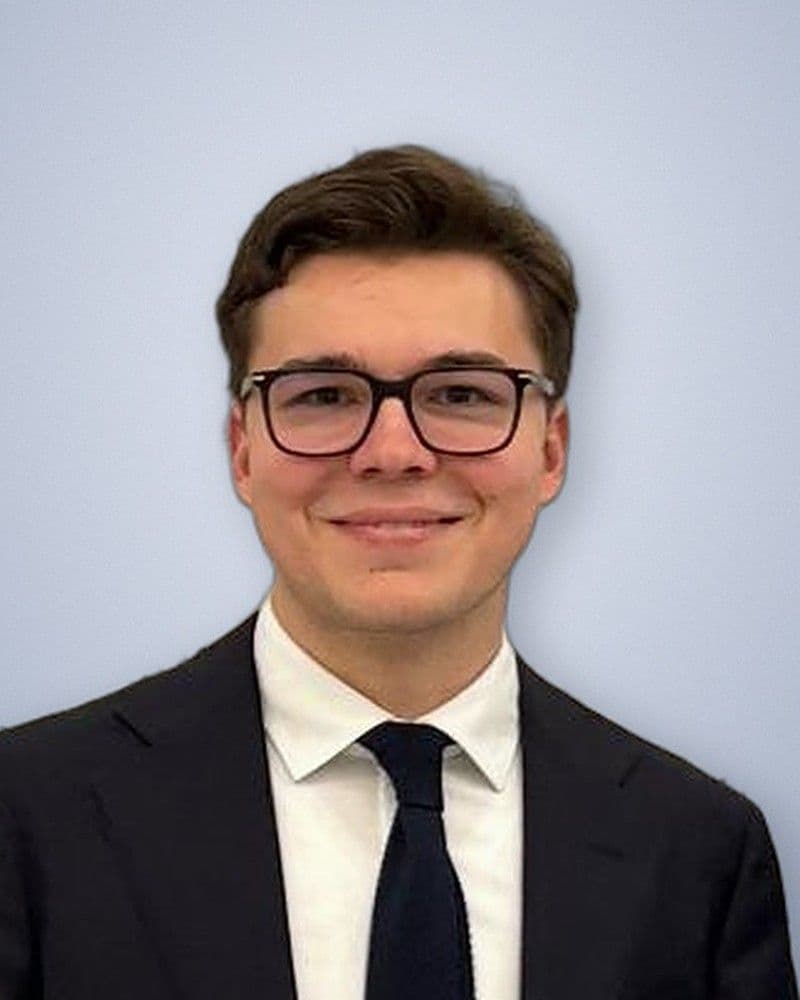
Niklas Klingel works at the intersection of politics, technology and religion, focusing on foreign and security policy and the ethical questions raised by technological innovation.
Across his studies, professional work and volunteering, he has co-founded and helped shape civil society organisations that turn ideas into collective action. He is driven by a commitment to the wellbeing of countries and their people, grounded in a deep appreciation for cultures and religions around the world.
What we study
Four pillars
- Information IntegrityForeign information manipulation, disinformation and the algorithmic fragmentation of the civic sphere.
- Geoeconomics & Supply ChainsSemiconductors, lithography, critical minerals and cloud infrastructure as instruments of power.
- Multilateral GovernanceReforming the UN, the WTO and the Bretton Woods system for dual-use technologies and a fairer voice for emerging economies.
- Strategic StabilityCyber operations, automated systems in command support and verifiable arms control for uncrewed platforms.
Across three horizons